Friday, April 8, 2016

Winter is Coming


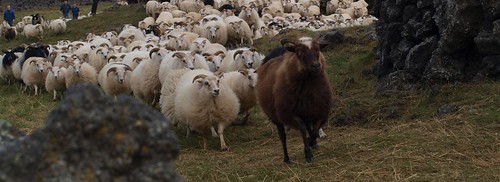
The first cold nights have started here in the Yarra Valley hills; non stop rainy days and it gets so much darker earlier too: Winter is coming.  It makes you want to spin yarn in front of the fire and whip the knitting needles out even faster than before ! Last week I offered you a Viking Adventure and this week I thought it would be nice to stay with the theme and give you some Icelandic sheep to cuddle up to. These babies can certainly keep you warm!

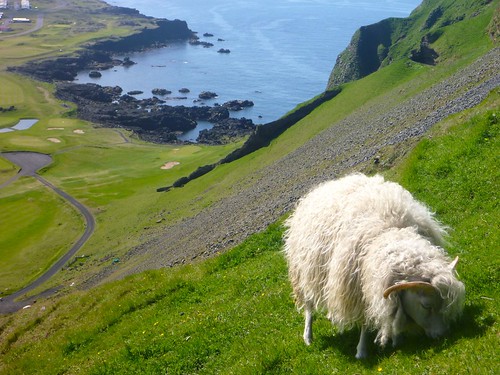
There are not many wild or domesticated local animals in Iceland, but the wildlife and farm animals Iceland do have are very special. Did you know there are more Icelandic sheep in Iceland than people?! Some farmers own nearly a thousand sheep of their own. The extensive farm land around Iceland's coast is full of them, and every summer they roam the highlands and mountains freely. They're tough, sturdy little animals, and grow lots of fluffy wool that the Icelanders use to make all their woollen goods from, also called LOPI wool. Icelandic sheep are a breed that has remained virtually unchanged for over 1,000 years, maybe the oldest and most genetically pure sheep breed in the world. Modern Icelandic sheep descend from sheep ferried by Vikings to Iceland during the 8th and 9th Centuries. Attempts to “improve” the breed by outcrossing generally resulted in increased vulnerability to disease, and so raisers on this island nation decided to keep their selective breeding attempts confined within the breed.

The Icelandic sheep is an ancient North European breed, slightly smaller than modern varieties, whose double-layered coat is uniquely suited to cold and wet conditions. The inner layer, or thel, is insulating, superlight and very airy, while the outer layer, or tog, is long, strong and water repellent. Carded together, these two layers make lopi, versatile wool used to knit lopapeysa, the distinctive traditional Icelandic sweater. Wool from the spring shearing is coarse and generally used to make carpets, while prized lopi wool comes from the autumn shearing.

A few weeks after the lambing in May, sheep are sent to run free and graze in mountain pastures until autumn, feeding on the rich and nourishing vegetation. Many farmers formerly allowed their sheep to graze in outlying pastures over the summer months, but as a result of the recent reduction in flocks, animals are increasingly kept on home pastures. Farmers gather their flocks in the autumn. Usually, the round-up is carried out on horseback with assistance of sheepdogs. The process can take up to a week. During this time, participants stay overnight in mountain huts located throughout the highlands. Each sheep farmer has his own earmark in order to identify his livestock. After the gathering, the sheep are all sorted into designated pens, according to earmarks. Many people, farmers or not, come to watch or take part in this event on the last day, which is usually followed by a big celebration the same night. This is a tradition cherished by Icelanders.

Icelandic sheep are a beautiful and eye-catching breed of sheep with incredible colour variations and seventeen possible combinations of colours and patterns. Known around the world for their fibre, the Icelandic sheep provides a soft, lustrous dual coated fleece. Icelandic sheep come in a range of natural colours and patterns which provide lovely wool that is very versatile and easy to spin, making this wool a handspinners delight.

Like I said before, Icelandic fleece is dual-coated. In Icelandic the long outer coat is called tog and the fine inner coat þel. When separated, the outer and inner coats are used for different woolen products.
Tog is generally classified as a medium wool around 27 micron. It is good for weaving and other durable products.
Thel, being the finer wool and classified as such, is generally around 20 micron. Tog and Thel are processed together to produce lopi, a distinctive knitting wool that is only made from the fleece of Icelandic sheep.

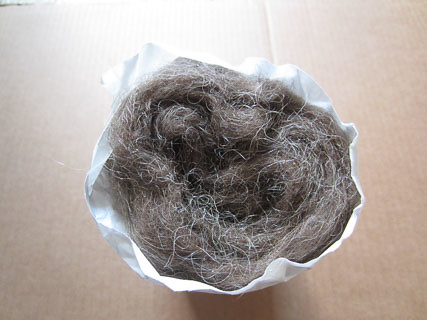
Last year I was able to offer you a very special rare sheep breed adventure called the Icelandic Leadersheep adventure that not many people knew anything about. This week I offer you carefully selected beautiful mid grey Icelandic tops of the prized autumn shearing and exquisitely soft too. PLUS!!! I have a very very VERY limited amount of the Leadersheep tops on offer as well and they combine very well with the grey autumn shearing of their Icelandic sheep brothers and sisters.

Something about the Leadersheep for those who have missed the info in last year’s blog entry: Every farmer on Iceland may have one or two or a maximum of say 10 of these animals in their flock. Not more. All in all there are about 1500 Forystufe sheep in existence today and that is one of the reasons why this rare sheep breed adventure was so hard to organise..obviously.

What are “Forystufe” I hear you say? Well, they are also called Icelandic Leader Sheep. The Icelandic leader sheep is a separate line within the Icelandic breed of sheep . The Leader sheep were probably brought to Iceland together with other sheep at the time of settlement in the 8th and 9th century. The sheep are lightly built with long legs and not as heavy as the Icelandic sheep, but otherwise similar. The leader sheep are known for their leader characteristics and a specific sense of directions, that were highly valued traits under the extensive farming conditions in Iceland in earlier times.

The leader sheep were used to bring the flock home in bad weather during winter grazing and they are still used to lead the flock when sheep are moved to and from summer pastures. The leader sheep are now a small population of around 1,500 purebred adult sheep that are spread between many flocks, with a few leader sheep on each farm. Leader rams have been kept at the AI stations in Iceland since 1981 as an aid to the conservation of the leader sheep. They are known best for their leadership characteristics. Many old stories tell how people and sheep have been lost in the Icelandic Highlands and Icelandic storms but were rescued and brought to safety by these special sheep. They remain calm, walk in front of the flock, and are alert to any impending danger. They will even bring the sheep down early if they sense danger. A special gene pool keeps these sheep with outstanding leadership abilities alive: These sheep are only bred to each other to keep the genetic tendencies strong. They are highly intelligent. Their sense of direction and ability to forecast impending bad weather are uncanny. The leadersheep are used when the farmers move the sheep from the home pastures up to the summer grazing area and then back home again before winter. Leader-sheep are more primitive than the modern Icelandic sheep. No comparable sheep are found elsewhere in the world !

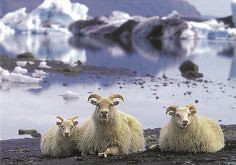
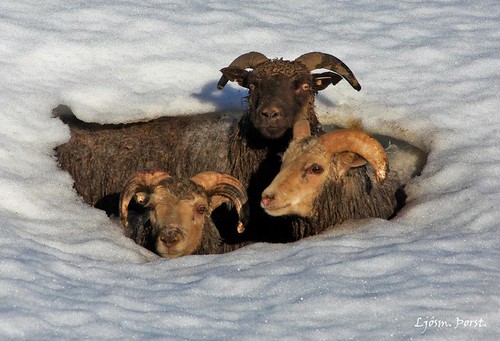
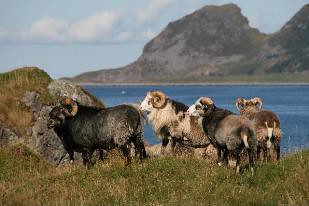
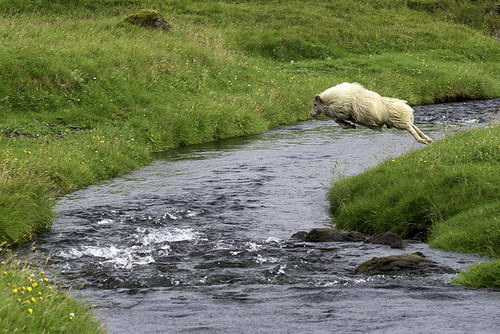
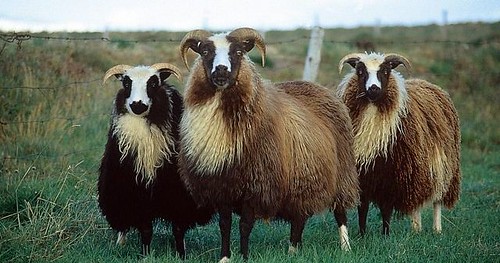
Here are some photos of beautiful Iceland and its’ sheep :


Here are two interesting videos on the Icelandic Leadersheep :


As the name implies these sheep were leaders in their flocks. Through the centuries they have played a very important part in survival in Iceland. The geographical location of the country makes habitation difficult, and, especially during winter, the weather is extremely changeable and often dangerous for both humans and animals.
With a growing season of only three months, hay was usually in short supply for most farmers until the middle of this century when modern farming methods increased hay yield. Animal and human survival often depended on a considerable amount of winter grazing of the sheep, which often were the only livestock a farmer had. The sheep flocks were usually driven by the shepherds several kilometres from the farm to the pastures where they scraped the snow to find whatever vegetation was available. Often the shepherds were just children from twelve years old and sometimes they had to stay with the sheep during the day. It was a tough life that required both ingenuity and strength.

The leadersheep had many qualities that made them special. Often they were very tame and loved humans, but always the other animals in the flock followed them blindly with a complete trust. The shepherd also trusted the instincts of these sheep and that trust often saved humans and sheep from certain death.
The leadersheep usually had an acute sense of the weather. They could sense change on the way often a whole day before a deadly blizzard hit. In these instances they often refused to leave the barn to go on pasture. If the weather was good and going to stay that way the leader usually was the first sheep out in the morning. If, on the other hand, the leader stayed  in the barn, not to mention if they refused to leave, it indicated bad weather. Woe the shepherd who ignored the forecast of their leadersheep.

Often, when the weather appeared good, the leader and the whole flock was forced out. In these cases the leader usually did his best to stop the flock or at least tried to delay the driving. Then on pasture they usually did not graze but stood alert and at the first sign of weather change, they rounded up the flock and headed home. The weather in Iceland is extremely changeable and often it takes less than an hour to change from sunshine to raging blizzard. In many cases when flocks were caught in that kind of a situation the leader found the way home even though the shepherd was totally lost. The shepherd trusted the ability of the sheep to find the way. A good leader would go home as fast as possible, though never faster than a speed which allowed all of the sheep to keep up. Some of the leaders were exceptionally good at finding ways over treacherous ground where the whole flock could follow. The same applied to finding fording places across rivers. Some were good at finding good places to graze in the winter. But all had an amazing ability to find their way home. Many could be trained to follow signs from the shepherd, not unlike a good dog can. Many stories are told about instances where farmers had difficulty in getting skittish sheep from one place to another. Then the leader was sent off and usually the difficult sheep followed him without hesitation.

The leadership ability runs in bloodlines and is equal in males and females. There were farmers who bred leadersheep and these were usually priced two or three times over what good sheep traded for. Bloodlines even became famous for their ability and were sought after. I have been told that leadersheep are often taller than other sheep, and often they do not have what one would call prime meat conformation. When in a flock of other sheep they can often be spotted since their heads are raised higher than others. They are usually very alert. .

During the eradication of maedi/visna (OPP) in Iceland earlier this century many feared that the leadersheep bloodlines would be wiped out. Around that time farming methods were also changing, making winter grazing unnecessary and thereby lessening the need for relying on the leadersheep. That prompted Asgeir Jonsson, a prominent sheep farmer at that time, to collect stories about leadersheep. Those stories were published in a book called "Leadersheep" (Forystufe) in 1953.

Svinavatns Surtur (Leader ram Surtur from Svinavatn) 
This happened in the fall roundup in 1884. A large flock of sheep had been gathered deep in the interior and a days drive over a mountain desert was ahead. In the morning, when the drive was to start a snowfall had begun and the weather was very dubious.
Shortly after leaving the previous nights resting place a raging blizzard hit. It was so furious that the drivers lost sight of all landmarks and could not find their way over the plains. To put up tents was impossible on the rocks and sand and turning back was questionable. It was known that Surtur, already recognized as a superior leader, was leading the flock. He had led the sheep steadily, but never faster than so that all the sheep could follow. Under these circumstances, the Mountain King (the leader of the men) decided to leave it to Surtur to lead everybody to safety, and firmly instructed his men to stick together.
When about one third of the trek over the plains was completed, Surtur stopped suddenly and came back to the men, who were behind the sheep flock. They immediately saw that Surtur's face was so covered with ice and snow that he could not see. After they had cleared his face he resumed his leading, facing the blizzard. For hours they moved steadily without any incidents except Surtur came back several times to have his face cleared.
Suddenly Surtur stopped and refused to go any further. The men found that grass was under their feet and therefore knew that they were out of the snow plains, but where they were no one knew. It was decided to stop there and put up tents, even though it was unpleasant. At dawn the blizzard abated somewhat and then the men realized that they were at the very spot where they usually stopped after crossing the sands. Every year, since Surtur was a lamb he had stopped there at this stage in the roundup. He had known exactly where to go even when the experienced and seasoned men had lost their way. When the Mountain King returned Surtur to his owner he said, that had it not been for Surtur's lead over the snow plains, several men and sheep would likely have died or suffered seriously from exposure. -This is only one of several stories of Surtur.

Kraga (leader ewe named Kraga).
In 1953, when the book "Leadersheep" was published, Kraga was still alive, born in 1944. Ten pages are devoted to several stories of Kraga. She was white, tall and a beautiful ewe. She was a leader right from her first winter.
This story is told by Kraga's owner: "One the 10th of December 1950 one of those North Atlantic blizzards hit. I had not yet taken my sheep in on hay but grazed them on the seashore not far from the farm. The evening before the blizzard I walked to my barn and was surprised to find Kraga standing by herself way back in the barn. Seeing this I decided to just catnap that night and be prepared for a weatherchange. Up to then the weather had been just fine.
At five o'clock in the morning I heard the roar from the sea and the blizzard. I rushed out and managed, with difficulty, to get the ewes from the shore. A few minutes later and it would have been too late. I also managed to call my neighbour and warn him, otherwise he would have lost several sheep. Later that winter, in early March, the weather had been good for a few days so I drove my sheep towards the mountains during the day. In the afternoon Kraga led the whole flock past the farm down to the shore where they spent the nights. One day, I was standing by the barn when Kraga came by with her flock. But instead of running past me as she usually did, she turned off the track and came directly to me. Naturally I stopped the flock and took them in on hay.

That night another killer blizzard hit". Farmers in Iceland do not use winter grazing any more. The need for leadersheep is not the same as it used to be . The Icelandic Leadersheep have a wonderful dual coat, similar to the Icelandic sheep , but I have found their fine undercoat to be thicker and more abundant than in the Icelandic sheep.

 The Icelandic leadersheep are genetically more ancient than the Icelandic sheep that have been bred more and more to be a more “lucrative” triple purpose breed: wool, meat and milk. The Leadersheep however has a totally different way of storing fat: unlike the Icelandic sheep it does not store its fat in its meat. It is extremely lean.

The milk production of leadersheep are triple that of Icelandic sheep. Because leadersheep have been cherished for their smart and leadership qualities, since they were brought to Iceland in the times of the Vikings, they have been bred only with other leadersheep.
Deemed unimportant to keep for meat purposes but more for their leadership capabilities, their milk production and their wool, may have kept this rare sheep breed safe from extinction.


Leadersheep Blend Tops 


Icelandic Leader Sheep, Cashmere, Angora bunny, Muga Silk, Glitz, Silver Angelina

100g tops                 Undyed $26         sold !!!


Icelandic Sheep Tops

100g tops natural mid grey, autumn shearing        $23      SOLD...SORRY

I only have a very limited amount of this special autumn shearing !!!


Dates to put in your Calendar !!

April 18th

Monday 10am-2pm


Grandvalley Spinners and Weavers Spin in
Tapscott Hall, Corner Cambridge and Montrose rd, Montrose


May

Saturday May 7th10am-3pmHealesville Spinners and Weavers Guild Chat, Spin and Shop


Please join me with the Healesville Spinners and Weavers on Saturday for their annual celebration.
I will be doing a talk about the IxCHeLbunny farm, fibres and yarns and lots more !!! There will be fibres to cuddle (and buy) and also spindles of all shapes and sizes.

The event is open to all but everybody is asked to bring a plate of food to share with the others to make it even more fun. The Hall opens at 11am with a group meeting and my talk will start around 12. After the talk there will be ample opportunity to browse, shop and mingle.

V.C. Mullett Hall (Badger Creek Hall), 358 Badger Creek Road, Badger Creek.
The hall is located next to the Badger Creek C.F.A. Station and opposite the Badger Creek Primary School. There is off road parking.

Sunday May 29th10am-3pmVictorian Hand Knitters Guild Show Coburg Town Hall

THE extra ordinary super fluffy yarny event in Melbourne !!!
I will be there with lots of hand dyed tops for spinning and felting and happy rainbow yarn and sock yarn, some extra special art yarns and much much more!!!!
As well as some amazing Lair of the Bearded Dragon spindles and bowls that are pure magic to spin with !

JULY

Friday July 15th- Sunday 17th, 9am-5pm


Bendigo Sheep and Wool Show
THE event of the year !!!! Not to be missed!! I will be there in the Flower (Power Bunny) Shed again with heaps of new goodies, hand dyed and hand spun, IxCHeL new blends and rare sheep breed adventures and much much more ! Including a world first of something AMAZING AND FUN!!!!! Shhh not telling ! but it is AWESOME !!!!


OCTOBER

2nd of October
Black n Coloured Sheep FIELD DAY  in Cranbourne!


Landscape dyes 

 100g tubs   AU$11 


Want to dye your own with easy to use acid dyes? I have been selling these Landscape dyes at my workshops and shows for a long time :  They are extremely easy to use and come in great shades.
Just contact me with the name of the colour you are after and I will get right back to you.


Have a creative week!
Please don't hesitate to contact me at any time if you have any questions okay? : Always happy to enable.

All my contact details are here:


How To Order:

1. You can email me on ixchel at rabbit dot com dot au or ixchelbunny at yahoo dot com dot au
2. Message me on facebook or 
3. Message me on www.ravelry.com  where I am Ixchelbunny.

I will email you right back with all your order details and payment methods.


Any questions? Any custom orders for yarn or dyeing fibre? : Please don’t hesitate to ask! Always happy to enable.


Thank you so much for your help and support !


 RABBIT ON !
((hugs))
Charly
qrcode

Friday, April 1, 2016

Vikings, Brave Women and Fibre


Easter has come and gone…and so have the chocolate eggs and bunnies, so I thought it would be a great time to have another adventure! This one has been more than a 8 months in the making and a lot of blood sweat and happy tears went into the conception, the research and the making of it. I am very happy to announce: VIKINGS !

I wanted to combine several ancient sheep breeds from the area where the Vikings hailed from: current Norway, Sweden, Iceland and the Faroe Isles. So the search started for the wool the Vikings would have used to make their sails and their clothes. It meant a lot of fun research and time to get it all happening.

 Here is some information of the different ancient and rare breeds that have gone into the making of the VIKINGS blend:

The Spaelsau Sheep can be found in Norway but is definitely a conservation breed and is also known as Gammelnorsk Spaelsau or shorttailed old Norwegian.
The oldest type is the sheep that comes from the coastal; region of Norway and has been around for at least 300 years and are also called old feral Norwegian or Gammelnorsk sau.
Recently a program has started so this sheep breed did not disappear all together. The fleece that was used in this blend is from the fine innercoat, but the Vikings used the outer coat together with some of the inner coat combined to make their sails. It has been calculated by scientists that to make a single sail for the Viking ships more than 200 fleeces were needed. Fortunately it was also estimated that a sail like that would last about 30 to 50 years ! Now that is a lot of trips to England and France and maybe even the Americas !

The Faroe Island sheep are from the Faroe islands and have been extremely important to the survival of the people on the islands for thousands of years.
The outer coat is very long (about 40cms !!!! ) but the innercoat is about 8 cm and very soft. For this blend the innercoat was used exclusively.
This breed of dual coated sheep is short tailed as well and is very closely related to the Spelsau and the Icelandics as well as the Shetland sheep.


Faroe island ewe and her cute lamb


The Gra Troender sheep  from Norway is a very rare breed of domesticated sheep that originated from crossbreeding native landrace sheep with the now extinct Tautra sheep in the late 19th century. There are currently approximately 80 animals all happily grazing in Norway. Yes, they are super cute as well.
Originally bred in the Trøndelag region of Norway, from where the sheep derives its name, the Gra Troender are most commonly varying shades of grey and white in colour with distinctive white markings under the eyes.
The wool of the sheep is uniform with mean fibre diameter of about 27-30 micron and 2–3 kgs greasy fleece weight. The wool was traditionally used for handicrafts and the pelts were used for woolskin rugs. The adult live weight of ewes is between 70 and 80 kg. The mean litter size is 1.8 lambs born per year.
The present population numbers only around 80 sheep but it’s increasing. In 1998, the Committee on Farm Animal Genetic Resources established a project for collecting and freezing semen from Gra Troender sheep rams in an effort to revive the breed. The fibre is very lofty and resembles the Shetland wool but with a bit more weight to it. It has a wonderful spring and vibrancy and luster to it and it spins up beautifully.


The Gutefar is an ancient sheep breed from Sweden, older than the Gotland.
Originally the Gute sheep were protected from “improvement” on the breed because they were in an isolated part of Sweden, however by the start of the 20th century the ancient Gute were mixed with other sheep to produce the hornless Gotland and less that 24 sheep of the ancient Gute sheep breed were left in the world.
Since then conservation breeding has helped this ancient sheep breed climb in numbers, but it is still a rare and vulnerable breed. It is not an easy fleece to process because there are layers and layers of inner and outer coat and kemp hairs to separate.
The separated inner coats are appr 17microns but you have to have the patience to sort it all out and separate it. A dehairer comes in handy !.


The Icelandic sheep is an ancient North European breed, slightly smaller than modern varieties, whose double-layered coat is uniquely suited to cold and wet conditions.
The inner layer, or thel, is insulating, superlight and very airy, while the outer layer, or tog, is long, strong and water repellent. Carded together, these two layers make lopi, versatile wool used to knit lopapeysa, the distinctive traditional Icelandic sweater.

Wool from the spring shearing is coarse and generally used to make carpets, while prized lopi wool comes from the autumn shearing.

A few weeks after the lambing in May, sheep are sent to run free and graze in mountain pastures until autumn, feeding on the rich and nourishing vegetation.
Many farmers formerly allowed their sheep to graze in outlying pastures over the summer months, but as a result of the recent reduction in flocks, animals are increasingly kept on home pastures. Farmers gather their flocks in the autumn.
Usually, the round-up is carried out on horseback with assistance of sheepdogs. The process can take up to a week. During this time, participants stay overnight in mountain huts located throughout the highlands. Each sheep farmer has his own earmark in order to identify his livestock.

After the gathering, the sheep are all sorted into designated pens, according to earmarks. Many people, farmers or not, come to watch or take part in this event on the last day, which is usually followed by a big celebration the same night. This is a tradition cherished by Icelanders.

Icelandic sheep are a beautiful and eye-catching breed of sheep with incredible colour variations and seventeen possible combinations of colours and patterns. Known around the world for their fibre, the Icelandic sheep provides a soft, lustrous dual coated fleece. Icelandic sheep come in a range of natural colours and patterns which provide lovely wool that is very versatile and easy to spin, making this wool a handspinners delight.

Like I said before, Icelandic fleece is dual-coated. In Icelandic the long outer coat is called tog and the fine inner coat þel. When separated, the outer and inner coats are used for different woolen products. Tog is generally classified as a medium wool around 27 micron. It is good for weaving and other durable products. Thel, being the finer wool and classified as such, is generally around 20 micron. Tog and Thel are processed together to produce lopi, a distinctive knitting wool that is only made from the fleece of Icelandic sheep. This process of combining medium or coarser wool fibres together with soft fibres is what I have been doing for as long as I can remember (angorino:superfine merino+angora and ofcourse the recent Viva Frida adventure with the Churro, agave, cashmere and angora,) and professionally, for about 13 years now with many other different kind of blends that adhere exactly to that principle. And this Icelandic process just proves the point I have been trying to make for years and sometimes made me feel like Don Quixote battling windmills: it creates a durable close to skin yarn and lovely to work with..


For this Vikings adventure I thought to combine ancient sheep breeds with the dyes used in the times of the Vikings as well, so that meant a whole different research on what pigments were available at that time.

I was very surprised that indigo dyed garments were found because indigo is not grown so far north and woad can produce heaps of blues as well. I obviously did not realise the normous trade in pigments like indigo and even kermes (insects found on oak trees in the Mediterranean!)
If you want to know a bit more about dyeing in the days of the Vikings , please visit this page with heaps of information on the pigments and the methods used to dye the fibres: https://sites.google.com/site/zoemcdonell/naturaldyeing

The pigments I have chosen to recreate the VIKING atmosphere so to speak on this Adventure of Rare Sheep breed blend are the following:

INDIGO for its’ deep blue tonal values,
OAK GALLS for the inky greys it can produce like a thundery dark sky,
DANDELION and WOAD pigment combo to create an interesting haunting teal,
WALNUT for the menacing browns and last but not least
MADDER  roots and fermented TURMERIC roots for a burgundy red/purple fit for a shield maiden. (although the use  of madder grown in Viking age is not proven yet, there have been burial sites discovered where te clothing fragments that were found had traces of madder..so..there ya go..)

The Viking Adventure will be shipped start of may and you can choose between tops or batts.

Please don't hesitate to contact me at any time if you have any questions okay? Always happy to enable. All my contact details are to be found at the end of this week’s blog entry. 


Rare Sheep Breeds Adventure 

VIKINGS

Tops 100+grams $24    SOLD OUT SORRY

 Batts 150+grams $36   SOLD OUT SORRY


Ingredients:
Spelsau Sheep (Sweden), 


Gra Troender ( Norway), 


Gute Far (Sweden), 


Faroe Island sheep (Faroe islands), 


Icelandic (Iceland) 


combined with 


angora bunny, 


cashmere 


and a tiny little bit of glitz to resemble the sparkle on the water or the snowy landscape. 


You can choose to sign up for batts or tops (or a combination of both), dyed or undyed. 


I will only be able to dye for those who sign up and I only have a very limited supply of this Viking blend available. 


Here are some photos that inspired me to choose the dye pigments and create that specific "Viking" mood (okay with a gratuitous Rollo without shirt on as an extra bonus thrown in..lol):


Just for you ....A Complementary Rollo for extra inspiration ….


”naked” VIKINGS Tops


What’s better than “naked” Vikings? 
A Close ups of “naked” Vikings….lol


Qiviut, Angora bunny, Cashmere, Tencel and silk 

Handspun 4 ply Yarn   

appr 160meters 
+/- 50grams
AU$32


Natural


Dates to put in your Calendar !!

April 18th

Monday 10am-2pm


Grandvalley Spinners and Weavers Spin in

Tapscott Hall, Corner Cambridge and Montrose rd, Montrose


May

Sunday May 29th
10am-3pm
Victorian Hand Knitters Guild Show Coburg Town Hall
THE extra ordinary super fluffy yarny event in Melbourne !!! I will be there with lots of hand dyed tops for spinning and felting and happy rainbow yarn and sock yarn, some extra special art yarns and much much more!!!! As well as some amazing Lair of the Bearded Dragon spindles and bowls that are pure magic to spin with !

JULY

Friday July 15th- Sunday 17th, 9am-5pm

Bendigo Sheep and Wool Show
THE event of the year !!!! Not to be missed!! I will be there in the Flower (Power Bunny) Shed again with heaps of new goodies, hand dyed and hand spun, IxCHeL new blends and rare sheep breed adventures and much much more ! Including a world first of something AMAZING AND FUN!!!!! Shhh not telling ! but it is AWESOME !!!!


OCTOBER

2nd of October

Black n Coloured Sheep FIELD DAY  in Cranbourne!


Landscape dyes 

 100g tubs   AU$11 


Want to dye your own with easy to use acid dyes? I have been selling these Landscape dyes at my workshops and shows for a long time, just never thought to put them on my blog. 
They are extremely easy to use and come in great shades. 
Just contact me with the name of the colour you are after and I will get right back to you.


Have a creative week!
Please don't hesitate to contact me at any time if you have any questions okay? Always happy to enable.

All my contact details are to be found at the end of this week’s blog entry.
Have fun !!!


How To Order:
1. You can email me on ixchel at rabbit dot com dot au or ixchelbunny at yahoo dot com dot au
2. message me on facebook
3. message me on www.ravelry.com where I am Ixchelbunny.

I will email you right back with all your order details and payment methods.

Any questions? Any custom orders for yarn or dyeing fibre? Please don’t hesitate to ask! Always happy to enable.
Thank you so much for your help and support !


 RABBIT ON !
((hugs))
Charly
qrcode

Friday, March 25, 2016

Happy Hoppy Easter!

Bunnies & Chocolate: what a great duo

Happy hoppy Easter everybody! What an amazing time for bunnies: well..busy..again..but hopping along. I remember Easter when I was a kid with my mum and dad , boiling and painting eggs and having a great time.

We didn’t much get into the whole chocolate egg thing (not to worry I have caught up by now..lol) but I generally remember it as being a wonderful happy weekend filled with painting and crafting and ..eggs…so I thought I would share some of my natural egg dyeing (which ofcourse can also be applied to yarns (hint hint)!! What’s not to like ;-)


Natural Dyed Easter Eggs with Trout Mayo and Herbs
Author: http://wholesome-cook.com/ (really a fab site with heaps of healthy recipes ! Go check it out!)
Recipe : Easter, eggs, fish and eggs, egg dye, natural
Prep time: 3 hours
Cook time: 15 mins
Total time: 3 hours 15 mins
Serves: 2-4 Eggs:
For best results use white-shelled eggs if you can find them , always organic free-range.
 Method and Timing: We cracked the eggs before dyeing to colour the egg whites in a pattern, this is optional, but works well for eggs that have already cracked. The dye takes time, longer on darker shells, so you may have to leave each egg in the dye for 2-3 hours. prepare extra dye containers if you want to colour more eggs and multiply the quantity of dye by the same number. Staining: both the turmeric and beetroot dyes can stain porous surfaces such as benchtops and floors.
Make sure you work on layers of old newspaper or a plastic table cloth to protect the surfaces. This recipe shows how to dye 3 eggs, one each in pink, orange and duck egg blue. Assumes eggs have been boiled (for 3-5 minutes) beforehand.
Serving suggestion follows.
Ingredients For the natural dyes: • 1 small beetroot • 2cm piece fresh turmeric root •
1 packed cup finely shredded red cabbage
 • 3 cups of water For the Eggs with Trout Mayo and Herbs:
• 3 natural dyed eggs
• 25g smoked trout (salmon or mackerel)
• 1 sprig spring onions
• a few dill or fennel fronds
• 2 tablespoons organic mayonnaise
• pepper, to taste • wedge of lemon, to serve

Instructions
To make the Beetroot (pink) or Turmeric (orange) Dyes: 1. Blend beetroot or turmeric with 1 cup warm water. Transfer to a glass or a jar to dye the eggs. To make the Red Cabbage (duck egg blue) Dye: 1. Place cabbage in a small saucepan and add 1 cup water. Bring to a boil then simmer for 15 minutes for the colour to develop. Discard cabbage and transfer to a glass or a jar to dye the eggs. To dye boiled eggs in plain colours: 1. Place an egg at a time into the dye and steep for 2-3 hours for a lighter shade, or overnight for a darker tint. Allow eggs to dry on a paper towel. To dye boiled eggs - shells and whites in patterns: 1. Crack each egg gently all over. Place an egg at a time into the dye and steep for 2-3 hours for a lighter shade, or overnight for a darker tint. Pat dry with a paper towel before peeling. To serve the Eggs with Trout Mayo and Herbs: Cut eggs in half lengthways. Arrange on a serving plate. Top each egg with a little smoked fish, decorate with herbs. Season with pepper. Serve with a little mayo and a lemon wedge.

Apart from the cooking , I have been dyeing up a storm and spinning lots of bunny yarns for you for this weeks update. I could not resist offering you some luscious bunny to Rabbit On with in your knitting ! Today is the first outing so to speal of my new 4ply “EweBunny” yarn spun with 25% angora and 75%superfine merino !! Yeah !! Very exciting and wonderful to work with: it is smooch, soft, has a nice fine twist and an amazing meterage of about 201-205meters per 50grams! That means that you will be able to make a pair of socks or make a wonderful scarf or shawl with just two skeins. The other yarn on offer tonight is a very fluffy handspun one: an 8ply handspun pure English angora yarn from our bunnies in 50gram skeins with a meterage of about 100-110meters. The fluffiness is totally decadent!

On another front: I feel much better only to overdo it (yeah I know) and now I torn a muscle in my shoulder connected to my spinning arm ! Really ! (insert angry face) ..not to worry..I am still spinning..be it very carefully…lol

Anyway, Here’s to a great weekend and a much better Easter week next week !!!! The club sign ups are still open for another week. Don’t wait too long to sign up to get your hands on some luscious very special club blends and fibres I have planned for the next three months !

Have a fabulous weekend ! Enjoy !

Please don't hesitate to contact me at any time if you have any questions okay? Always happy to enable. All my contact details are to be found at the end of this week’s blog entry. 


New IxCHeL Club sign ups are now open! 

The Batt Club is almost filled up and the fibre club as well, so do not wait too long please!

for the months : April, May and June 2016 

(til quotas are reached or until March 31st)

For all our international club fans there is a possibility to ship all three clubs together to save on postage if you want :-) Just pm me and enquire about the options available.

IxCHeL Fibre Club April, May and June 2016

The subscription is for a period of three months and you will receive one special hand dyed top/roving per month to the value of AU$24 or more
All the tops will be hand dyed and will be especially made for the members of Ixchel Fibre Club ! Price to join the IxCHel Fibre Club #28 and receive your special hand dyed top :)) for three months (January, February and March 2016) is AU$72 + postage (parcel post or airmail). AND there are good value double serves available !!!

For Australia : single serve $72+$28 postage (parcel post), double serve $136+$28 (save $8) or triple serves $204 (save $12!) + postage
For USA + Canada: single serve AU$72+AU$51 (Airmail) double serve AU$136+AU$51
For UK,Europe, rest of the world: Single serve AU$72+AU$60 (airmail) Double serve AU$136+AU$60
For Asia: Single serve AU$72+AU$45 (airmail) Double serve AU$136+AU$45
If you want to receive a fibre surprise every month then join the IXCHEL FIBRE CLUB #28 now. Numbers are strictly limited ! The April 2016 Club is going to be shipped out end of April. Payment via direct deposit or credit card or paypal. Just PM or email me your details

The IxCHeL Sock Yarn Clubs April, May and June 2016


Every month for three months (April , May and June 2016) you will receive: enough hand dyed luscious yummy yarn to make a pair of socks or a lush shawl or scarf ofcourse! (the hand dyed yarn will be exclusive for the Ixchelbunny SOCK-IT-TO-ME Yarn CLUB and will range from a sockweight yarn or a 3ply or a 4 ply); Every month a new sock pattern, tips and instructions ! Now is that GOOD or is that GOOD ??!

I will even offer a double serve for those of you who like their socks extra long !


For Australia : single serve $78+$28 postage (parcel post) double serve $130 (= one skein FREE!!!) +$28

For USA + Canada: single serve AU$78+AU$51 (Airmail) double serve $130 (= one skein FREE!!!) +AU$51

For UK,Europe, rest of the world: Single serve AU$78+AU$60 (airmail) Double serve $130 (= one skein FREE!!!) +AU$60

For Asia: Single serve AU$78+AU$45 (airmail) Double serve $130 (= one skein FREE!!!) +AU$45


Numbers are strictly limited ! 
Payment via direct deposit or credit card or paypal . Just PM or email me your details 
  By the way: you don’t HAVE to knit socks if you don’t want to.. the hand dyed yarn is amazingly nice for scarves, cowls, beanies and even tops ! Anything goes .

IxCHeL Funky Bunny Batt Clubs April, May and June 2016

Here are all the details and just pm me when you have any questions or want to be part of the funky bunny batt club Movement ;-) Welcome to the blingy dark side ;-D
The subscription is for a period of three months and you will receive one special hand dyed funky bunny batt per month to the value of AU$40 or more .
The batts will range in weight from 140grams to 180grams with luxury fibres like camel , angora, cashmere, silk, yak, llama even wolf and bison and rare sheep breeds !!!! All the batts will be hand dyed and will be especially made for the members of Ixchel funky bunny Club ! Every month you will receive a HUGE luxury funky bunny batt !
Sign up now and you will receive an Ixchel Hand dyed , super luxurious funky bunny batt for April, May and June 2016.

Price to join the Ixchel Funky bunny for three months is :
For Australia : $108+$28 postage (parcel post)
For USA + Canada: AU$108+AU$51 (Airmail)
For UK,Europe, rest of the world: AU$108+AU$60 (airmail)
For Asia: AU$108+AU$45 (airmail)
If you want to receive a fibre surprise every month then join the IXCHEL FUNKY BUNNY BATT CLUB now. Numbers are strictly limited ! The first installment is going to be shipped out end of April :) Payment via direct deposit or credit card or paypal. Just PM or email me


EweBunny Yarn Yarn   

75% superfine merino/ 25% angora bunny

50+gram , 4 ply
AU$17

a whopping 201meters)
Needles 2.25-4mm


Shades of Grey

Purple Power


Moss Queen

Moss Queen close up


Indigo


Indigo Dark


HobGoblin


Dusky Purple


Dream


Walnut Rose


Velvet


Steampunk


Rose


Rainbow


Ice


Happy


Glacier


Autumn Leaves


IxCHeL Angora Bunny Handspun Yarn   

100% angora bunny (lovingly and humanely grown on our farm) appr 8ply, +/- 100-110meters per
the softest yarn !!!! 

50+gram skein
AU$28


Natural


Spring Fest

Rose Petal

Rainbow

Moss and Ice

Frozen Forest


Qiviut, Angora bunny, Cashmere, Tencel and silk 

Handspun 4 ply Yarn   

appr 160meters 
+/- 50grams
AU$32


Natural


Dates to put in your Calendar !!

April 18th

Monday 10am-2pm


Grandvalley Spinners and Weavers Spin in

Tapscott Hall, Corner Cambridge and Montrose rd, Montrose


May

Sunday May 29th
10am-3pm
Victorian Hand Knitters Guild Show Coburg Town Hall
THE extra ordinary super fluffy yarny event in Melbourne !!! I will be there with lots of hand dyed tops for spinning and felting and happy rainbow yarn and sock yarn, some extra special art yarns and much much more!!!! As well as some amazing Lair of the Bearded Dragon spindles and bowls that are pure magic to spin with !

JULY

Friday July 15th- Sunday 17th, 9am-5pm

Bendigo Sheep and Wool Show
THE event of the year !!!! Not to be missed!! I will be there in the Flower (Power Bunny) Shed again with heaps of new goodies, hand dyed and hand spun, IxCHeL new blends and rare sheep breed adventures and much much more ! Including a world first of something AMAZING AND FUN!!!!! Shhh not telling ! but it is AWESOME !!!!


August

Date to be confirmed

Black n Coloured Sheep Show in Cranbourne

Landscape dyes 

 100g tubs   AU$11 


Want to dye your own with easy to use acid dyes? I have been selling these Landscape dyes at my workshops and shows for a long time, just never thought to put them on my blog. 
They are extremely easy to use and come in great shades. 
Just contact me with the name of the colour you are after and I will get right back to you.


Have a creative week!
Please don't hesitate to contact me at any time if you have any questions okay? Always happy to enable.

All my contact details are to be found at the end of this week’s blog entry.
Have fun !!!


How To Order:
1. You can email me on ixchel at rabbit dot com dot au or ixchelbunny at yahoo dot com dot au
2. message me on facebook or ravelry where I am Ixchelbunny.

I will email you right back with all your order details and payment methods.

Any questions? Any custom orders for yarn or dyeing fibre? Please don’t hesitate to ask! Always happy to enable.
Thank you so much for your help and support !


 RABBIT ON !
((hugs))
Charly
qrcode